Showing posts with label citizen science. Show all posts

June 6, 2017

Crowd Science in Math


Source: https://www.groton.k12.ct.us/
Carl Friedrich Gauss said that “mathematics is the queen of sciences”[1] because it is not motivated by applications in other fields of sciences but is vastly applied to them. Since mathematics is a “pure” science[2] the process of discovery in it is for the most part enclosed within a single individual researcher or a group of researchers. In this article I would like to explore the Polymath Project and the implications of how it has changed the way of doing mathematics. More specifically I would like to touch upon the question of how can crowd science become a tool for solving the most challenging (mathematical) problems?

January 6, 2016

Science? Yes, we can!

Science? Yes, we can!

This slogan was not only used by “Bob the Builder” or Barak Obama during his campaign, it implicit describes a new way of science. Everyone is able to do research. Citizen Science is obviously a new trend in research and is used and communicated as new way of science. We all can participate and contribute to science; it is no longer a very exclusive activity of some nerds in white coats. Science is open to people like you and me. But, to be honestly, is this really a new thing? Is it just an invention of some creative marketing guys and a relatively easy approach to distract attention from major problems of science and society? The overall title of this currently very popular phenomenon “Citizen Science” is used for programs, strategic papers and much more. This blog article summarizes some aspects of a discussion a class of STS scholars had in December 2015. How can we classify Citizen Science contributions and what is missing? What are the drivers and what motivates to participate and which problems can occur? I will put some spots on these questions and give my opinion on some aspects.

October 1, 2015

A course on Open Science - why now?

"What science becomes in any historical era depends on what we make of it" (Sandra Harding)
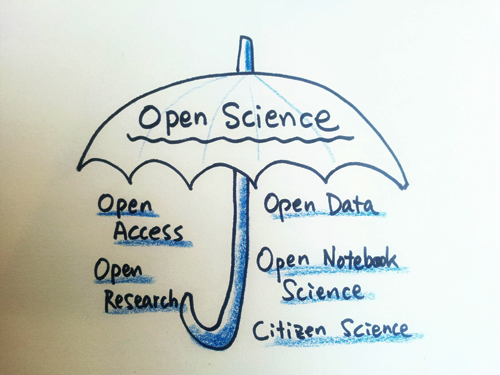
Open Science 우산 | by eotls4387


The idea to create a course on issues in Open Science practices came in 2014, when I tried to grasp the diversity of concepts under the umbrella term of Open Science. Then, a public consultation was launched to collect perspectives on Science 2.0, its benefits and challenges.


Furthermore, at that time we witnessed global turmoil in the relationships between universities and publishing houses.

Last but not least, Open Science and the advancement of Open Access to publications and research results will be one of the priorities of the Dutch Council presidency of the European Union in 2016. Besides renegotiating transparent contracts with scientific publishing houses, emphasis will be on the legal necessities and modifications to existing legal frameworks to make copyright legislation better suited for Open Science, with special regard to the question of re-usability of copied or recorded materials.

Suddenly Open Science became a buzzword that made its long term advocates wonder how fast professional buzzword compliance and open-washing will take over....

In any case, Open Science promises to be a rich resource for STS inquiry. We can start by looking at the policy imaginiaries currently at work.